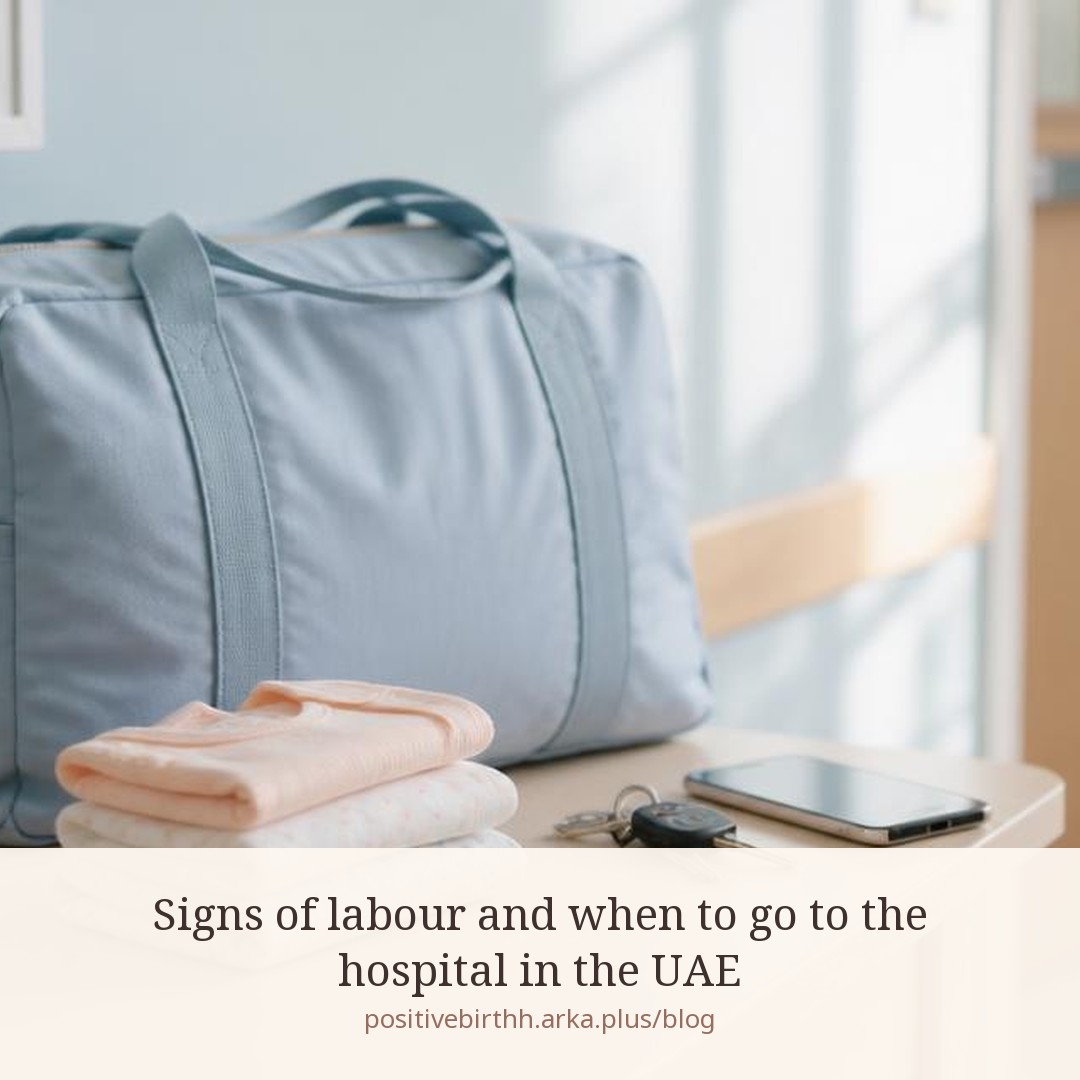
Signs of labour and when to go to the hospital in the UAE
One of the most common questions I get in the last weeks is simply: how will I know, and when do we leave? Labour rarely begins with one dramatic moment — it usually builds, and knowing the pattern keeps you calm at home for longer, which is exactly where early labour goes best.

The early signs
- A show — losing the mucus plug, sometimes streaked pink or brown. It can happen days before labour.
- Loose stools, a burst of nesting energy, or feeling unusually emotional as hormones shift.
- Period-like cramping and a dull, low backache that comes and goes.
- Baby dropping lower, so breathing feels easier and the pressure moves down into your pelvis.
Practice contractions versus real ones
Braxton Hicks tighten, but they are irregular, usually painless, and they settle if you change what you're doing — have a bath, drink water, lie down. Real labour contractions get longer, stronger and closer together, and they keep going regardless of what you do.
A useful test: if you can still chat through them and they fade when you rest, stay home and sleep. If you have to stop mid-sentence and breathe, labour is establishing.
The 5-1-1 or 10-1-1 guide
Most hospitals here will want to see you when contractions are about five or ten minutes apart, each lasting a minute, and holding that pattern for an hour — often described as 5-1-1 or 10-1-1. If this is a second or subsequent baby, or you live far from your hospital in Dubai traffic you could decide to leave earlier.
Go in straight away if
- You have bright red vaginal bleeding, like a period or heavier.
- Your waters break and the fluid is green, brown or has a strong smell.
- Baby's movements have reduced or changed from their normal pattern — never wait on this one.
- You have a severe headache, visual changes, or sudden swelling in the face and hands.
- You feel constant pain that does not come in waves, or something simply feels wrong.
If your waters break first
Note the time, colour and smell, put on a pad, and contact your maternity team for individual advice. Seek prompt assessment for green, brown, bloody or unpleasant-smelling fluid, reduced movements, fever, or if you have been told you carry Group B strep. Avoid tampons and intercourse; ask your team about bathing because local guidance and individual risk factors differ.
What to do while you wait at home
If your maternity team says it is safe to remain at home, eat and drink as advised, rest if it is night, and use light distraction if it is day. Slow breathing and warm water may help — see breathing in labour and water in labour. Call again whenever the pattern changes or you are worried; timing should follow your individual guidance, not a rule alone.
Share this article
Tap “Save image” first so the picture is in your photo gallery. Then tap “Share on Instagram” — the caption is copied automatically and Instagram opens. Add the saved picture to your story, paste the caption, and use a link sticker for the article link.
Want to talk this through?
A free 30-minute discovery call is the easiest place to start.