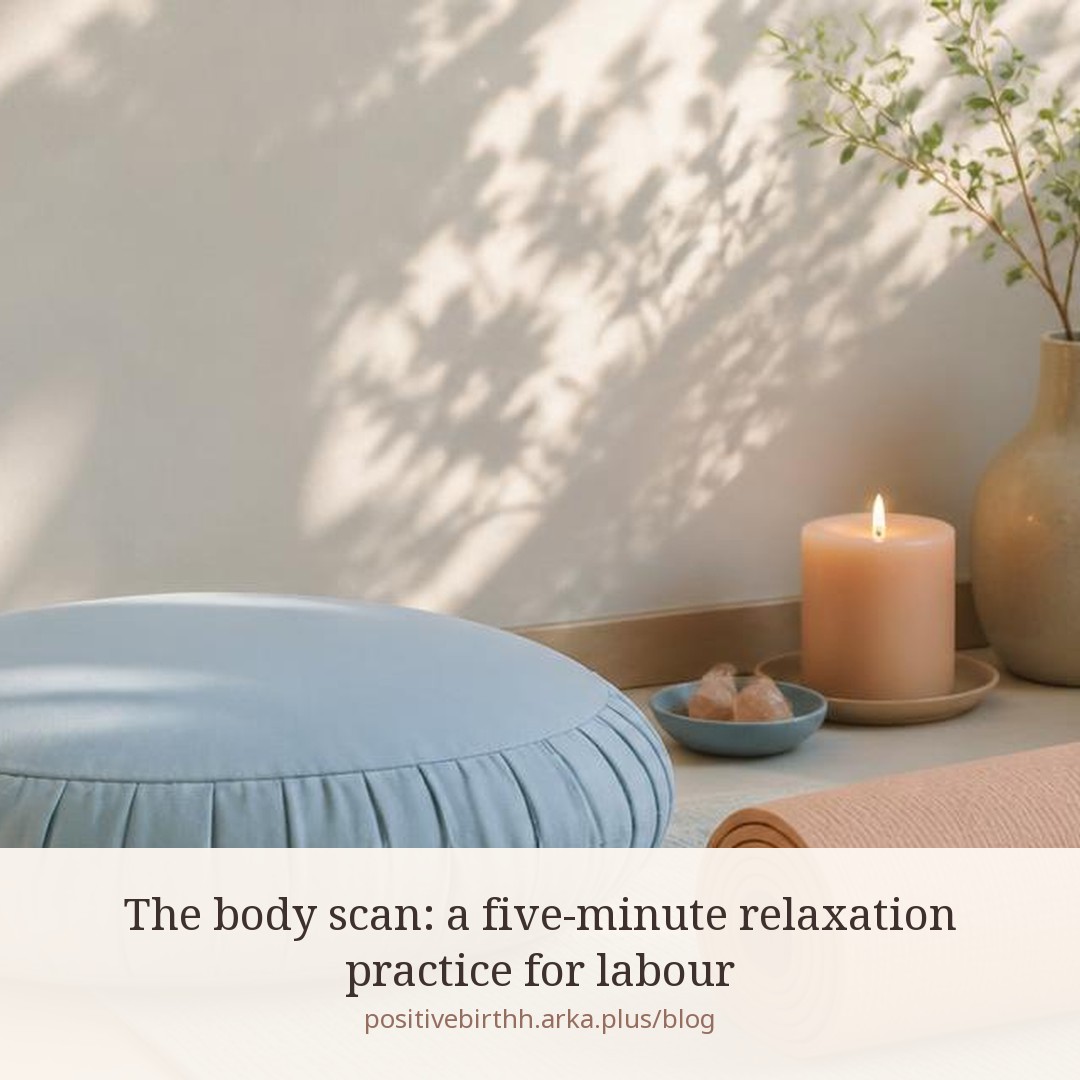
The body scan: a five-minute relaxation practice for labour
A body scan is a guided relaxation technique: you move your attention slowly through the body, notice where you are holding tension, and deliberately soften each area on the out-breath. It takes about five minutes, needs no equipment, and it is one of the most useful things you can practise before labour.

Why it helps in labour
Tension travels. A clenched jaw and lifted shoulders are almost always accompanied by a tight pelvic floor, and a tight pelvic floor works against the very thing your body is trying to do. Releasing tension also lowers adrenaline, which protects the oxytocin that keeps labour moving.
The scan gives your mind a single, concrete job during a surge — checking and softening — rather than bracing against the sensation.
How to do it
- Get comfortable: side-lying with a pillow between your knees, or leaning forward over a birth ball.
- Take three slow breaths, making the exhale longer than the inhale.
- Bring your attention to your forehead and scalp. Notice any tightness, then let it go as you breathe out.
- Move down slowly — eyes, jaw, tongue, throat, shoulders, arms, hands, chest, belly, lower back, hips, pelvic floor, thighs, calves, feet.
- At each stop, name what you feel without judging it, then soften on the out-breath. Spend longest on the jaw, shoulders and pelvic floor.
- Finish with one whole-body breath, imagining the exhale travelling from head to toes.
Making it work on the day
Practise every evening in the last weeks of pregnancy so the pattern becomes automatic. In labour you won't run the full scan during a surge — you'll use a shortened version between them: jaw, shoulders, hands, pelvic floor. A partner can prompt it out loud, which is often more effective than trying to remember it yourself.
Share this article
Tap “Save image” first so the picture is in your photo gallery. Then tap “Share on Instagram” — the caption is copied automatically and Instagram opens. Add the saved picture to your story, paste the caption, and use a link sticker for the article link.
Want to talk this through?
A free 30-minute discovery call is the easiest place to start.